Academic Excellence

Building Knowledge.
Preparing for Tomorrow.

Discover the academic programmes, learning resources and educational opportunities at Naggulu Seed Secondary School. Our academic approach is designed to support learning, develop knowledge and encourage students to work towards their educational goals.

O-Level Uganda Certificate of Education (UCE)
A-Level Uganda Advanced Certificate of Education (UACE)
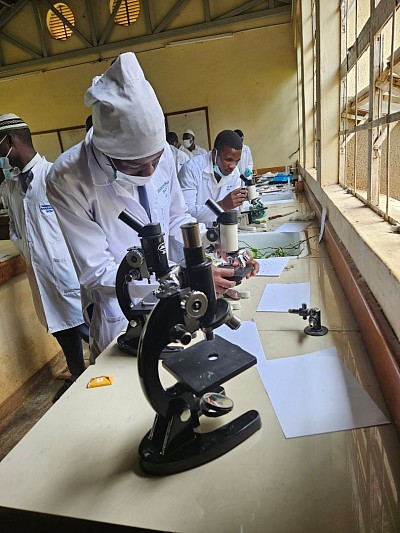
Practical Learning Science laboratory and practical learning area
Learning Resources Library, classrooms and computer laboratory
Our Programmes

Academic Pathways for Students

The school offers both Ordinary Level and Advanced Level secondary education. These stages provide students with opportunities to develop their knowledge, strengthen their academic foundations and prepare for further study.

O-LEVEL · UCE

Ordinary Level Education

Ordinary Level education supports the development of foundational knowledge across the curriculum. Students build subject understanding, practise problem-solving and prepare for the Uganda Certificate of Education.

  • Development of core academic knowledge and skills.
  • Learning across science, mathematics, languages and humanities.
  • Preparation for national UCE examinations.

A-LEVEL · UACE

Advanced Level Education

Advanced Level education gives students an opportunity to study selected subjects in greater depth. Students follow approved subject combinations and prepare for the Uganda Advanced Certificate of Education.

  • More focused study in selected subject areas.
  • Development of analytical thinking and independent learning.
  • Preparation for UACE and possible further education pathways.
Learning Areas

Subjects and Knowledge Development

Students develop knowledge and skills through the subjects taught at each level. Subject selection and availability should follow the National Curriculum Development Centre (NCDC) approved curriculum and current subject offerings.

A Broad Foundation for Lifelong Learning

A balanced secondary education encourages students to understand concepts, communicate clearly, analyse information, solve problems and apply their learning to everyday situations.

At Ordinary Level, students develop their foundations across a range of subjects. At Advanced Level, they pursue more specialised study through the subject combinations offered by the school.

Mathematics

Quantitative reasoning, calculations, logical thinking and problem-solving.

Sciences

Scientific understanding, investigation and practical learning through relevant science subjects.

Languages

Communication, comprehension, reading and written expression.

Humanities

Understanding people, society, history and the world around us.

Advanced Level

A-Level Subject Combinations

Explore science, arts, humanities and business-oriented subject pathways, alongside examples of university courses commonly associated with these areas of study.

Some of the Science Combinations

Science, health, technology, engineering and quantitative study pathways.

PCB

Physics, Chemistry and Biology

A science pathway focused on the life sciences and physical science foundations.

Examples Of some Possible University Courses
  • Medicine (MBChB)
  • Pharmacy
  • Nursing Science
  • Veterinary Medicine
  • Biological Science with Education
PCM

Physics, Chemistry and Mathematics

A quantitative science pathway with a focus on mathematical and physical principles.

Examples of some Possible University Courses
  • Civil Engineering
  • Electrical Engineering
  • Mechanical Engineering
  • Architecture
  • Surveying and Physical Sciences
BCM / BCFN

Biology, Chemistry and Mathematics / Food and Nutrition

These labels refer to different subject pathways. The exact subjects depend on the combination approved by the school.

Examples of some Possible University Courses
  • Agriculture
  • Food Science and Technology
  • Industrial Chemistry
  • Biotechnology
  • Pharmacy, where prerequisites are met
PEM

Physics, Economics and Mathematics

Combines quantitative reasoning and physical science with economic analysis.

Examples of some Possible University Courses
  • Quantitative Economics
  • Statistics
  • Commerce
  • Business Computing
PAM

Physics, Agriculture and Mathematics

Gives us number and calculations to measurements and plans to solve problems and Agricultural practices.

Examples of some Possible University Courses
  • Agricultural business
  • Irrigation and water engineering
  • Engineering
  • Veterinary medicine
BAG

Biology, Agriculture and Geography

Helps to understand living things like plants, animals, living things climate and physical features.

Examples of some Possible University Courses
  • Soil science
  • Education in Biology
  • Land surveying and Geometrics
  • Science in Worldlife health

A hint on Arts and Humanities

History, society, literature, geography and related academic fields.

HEG

History, Economics and Geography

A humanities and social sciences pathway examining societies, economies and places.

Guide on some Possible University Courses
  • Law (LLB), subject to entry requirements
  • Economics
  • Social Sciences
  • Arts with Education
  • Development Studies
HEL

History, Economics and Literature in English

A pathway bringing together historical understanding, economics and literary study.

Guide on some Possible University Courses
  • Law (LLB), subject to entry requirements
  • Journalism and Mass Communication
  • Drama and related arts
  • Languages and Literature
HGL

History, Geography and Literature in English

Combines historical knowledge, geographical understanding and written expression.

Guide on some Possible University Courses
  • Arts and Social Sciences
  • Tourism and Hospitality Management
  • Arts with Education
  • Selected arts and creative programmes
GIL

Geograpy, Islamic Religous Education and Luganda

Understand the use of the environment, Respect & Honesty and how to communicate well in our local language.

Guide on some Possible University Courses
  • Journialism
  • Arts in translation and interpretation
  • Diploma in Education-Sec/Primary
  • Arts in law
DEG

Divinity, Economics/ Ent and Geography

The supplied labels cover different combinations. Confirm each code's exact subject names with the school's official subject list.

Guide on some Possible University Courses
  • Social Sciences
  • Agribusiness Management
  • Education
  • Community-Based Development
HAL

History, Arts and Design and Luganda

To communicate our history and Art in our own local language and protect our culture.

Guide on some Possible University Courses
  • Diploma in Art and design
  • Bachelor of Arts in heritage and museum studies
  • Bachelor in film and animation
  • Interior design

Business and Entrepreneurship

Business, finance, commerce and enterprise-related fields of further study.

MEE

Mathematics, Economics and Entrepreneurship

A business-oriented pathway linking quantitative skills, economic thinking and enterprise. Confirm that these are the exact subjects represented by MEE at the school.

Guide on some Possible University Courses
  • Commerce (BCom)
  • Business Administration (BBA)
  • Accounting and Finance
  • Real Estate Management
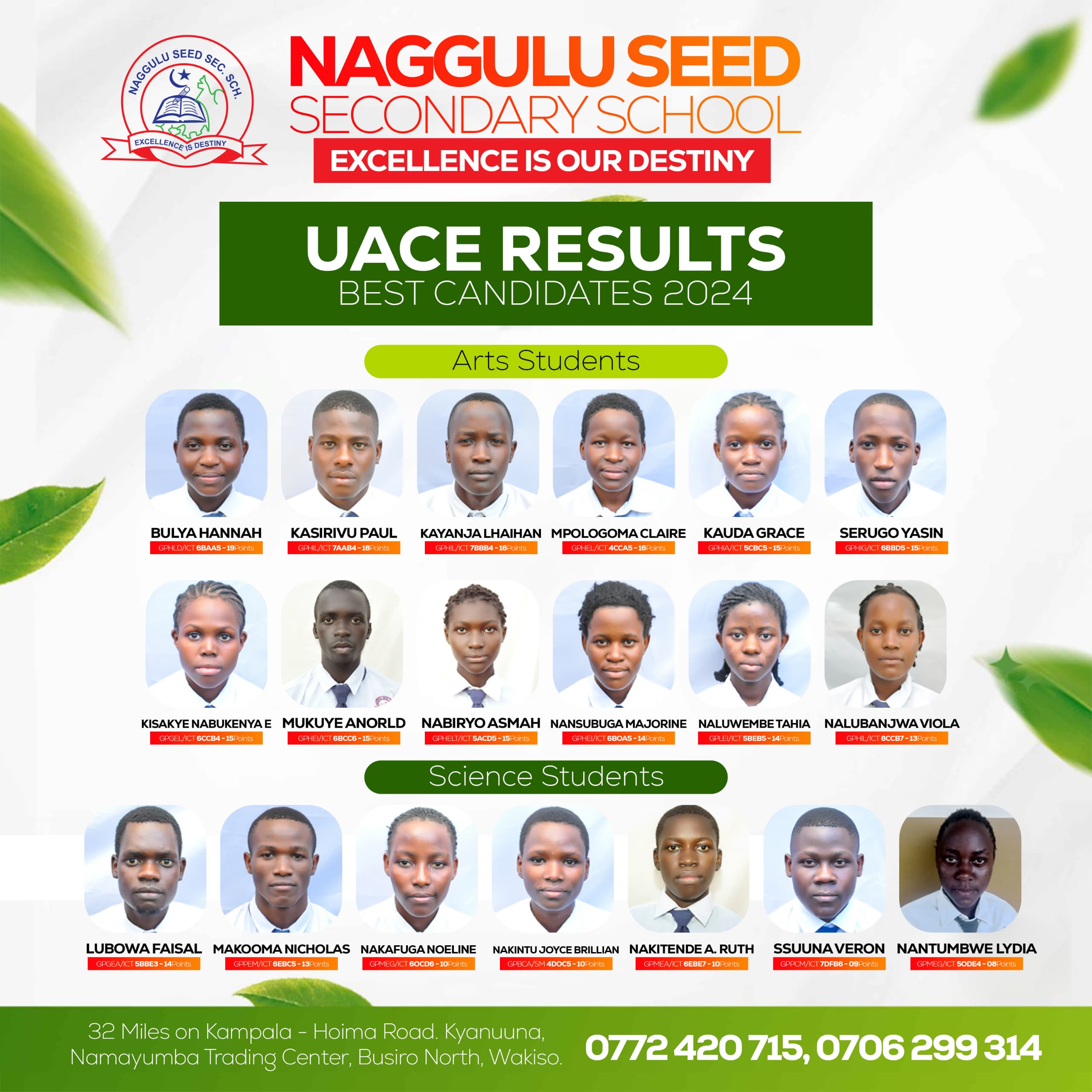
Examination Results

Academic Performance

The following figures were supplied for the school's 2025 UCE and UACE subject performance. They provide a snapshot of the reported results and subject trends.

Performance indicators below are presented as supplied. Percentage-point changes are shown using the direction and values provided in the supplied subject summaries.

National Examination

UCE Performance

2025 Examination
Reported Average Pass Rate 72.6%
Subject Performance Reported pass rate
English 60.0% ↑ 18.0%
Mathematics 83.0% ↑ 56.0%
Biology 82.0% ↑ 29.0%
Physics 63.0% ↑ 36.0%
Chemistry 75.0% ↑ 53.0%
Reported highlights: The supplied summary reports a 72.6% average pass rate across the listed core UCE subjects. Mathematics is listed at 83.0%, while Biology is listed at 82.0%. Mathematics is reported to have gained 56 percentage points compared with 2024.
National Examination

UACE Performance

2025 Examination
Reported Average Pass Rate 47.3%
Subject Performance Reported pass rate
Mathematics 44.0% ↓ 2.0%
Physics 50.0% ↑ 20.0%
Chemistry 0.0% ↓ 13.0%
Biology 27.0% ↓ 9.0%
History 68.0% ↓ 28.0%
Reported highlights: The supplied summary reports a 47.3% average pass rate across core UACE subjects. History is listed at 68.0%, and Physics is listed at 50.0%. The supplied narrative also mentions a 33-percentage-point Physics improvement since 2022; the comparison period should be confirmed before that statement is published.
Learning Environment

Resources for Learning

The school has identified the following learning facilities and resources as part of its educational environment. Their use supports different learning activities across the school.

Classrooms

Classrooms

Spaces for lessons, teacher guidance, classroom discussions, assignments and collaborative learning.

Science Laboratory

Science Laboratory

A learning space for practical science activities that complement classroom explanations and theory.

Computer Laboratory

Computer Laboratory

A resource for computer-based learning and the development of digital skills.

Library

Library

A learning resource intended to support reading, research, revision and independent study.

Sports Facilities

Sports Facilities

Spaces for sports and physical activities that complement students' broader school experience.

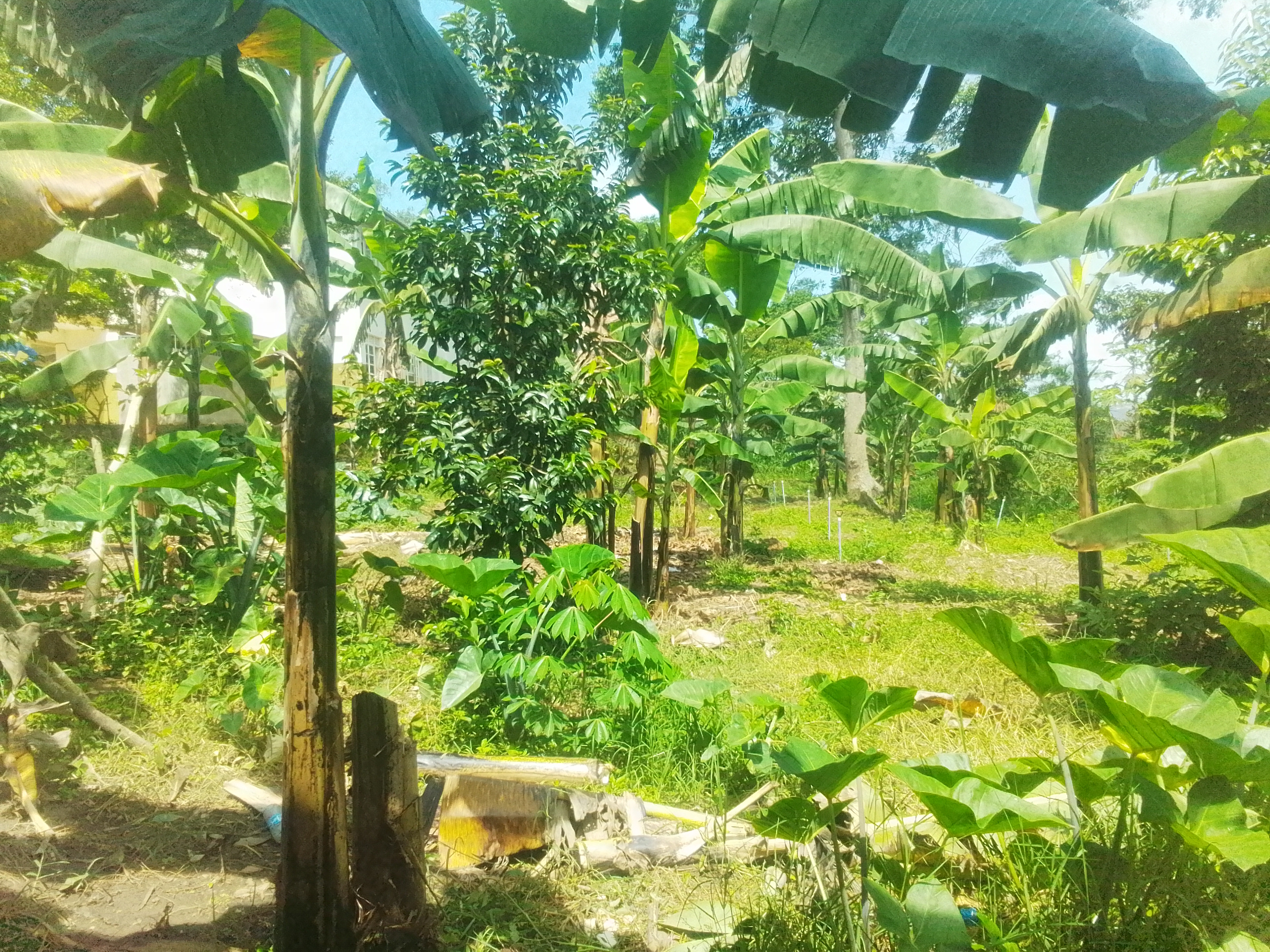
School Garden and Practical Learning

School Garden and Practical Learning

An area that can support practical activities and learning through observation and participation.

School parade at Naggulu Seed Secondary School
Learning Beyond the Classroom Education brings together knowledge, practice, responsibility and personal development.
Our Learning Approach

Developing Knowledge and Confidence

A meaningful education involves more than preparing for examinations. It also involves building habits that help students learn, think carefully, work with others and approach new challenges responsibly.

The following principles describe a proposed general educational approach. The school should approve or adapt them before presenting them as its official academic policy.

  • Understanding and critical thinking Encourage students to ask questions, explore ideas and understand what they learn.
  • Practice and preparation Support revision, regular practice, assignments and preparation for assessments.
  • Responsible collaboration Encourage respectful discussion, teamwork and responsible participation in learning.
  • Continuous improvement Use feedback and assessment to identify strengths and areas that need more attention.

Ready to Learn More About Our School?

Contact Naggulu Seed Secondary School for information about admissions, the subjects offered, A-Level combinations and the school's academic programmes.

Contact the School